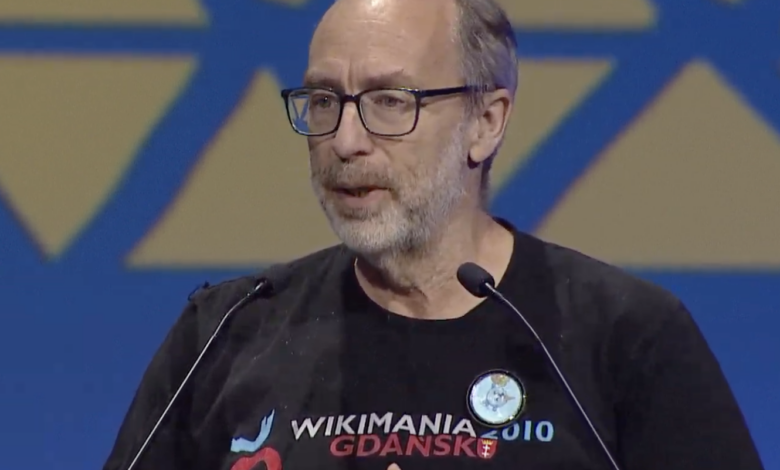
My earliest memories on Wikipedia come from the passionate, high-stakes edit wars over my absolute favourite breakfast food: yoghurt. Or shall I say “jogurt” (Polish spelling)?
Depending on where you are standing, it is “yogurt” in the US, “yoghourt” in parts of Canada, “yoghurt” in the UK and of course ‘jogurt’ in my native Polish.
Alas, the Europeans lost the edit war, and the page is called Yogurt, but then the image file that illustrates it is sneakily called “Joghurt” – so a kind of compromise was reached, typical for Wikipedia. Back in the day, deciding which spelling to use for the page title felt like a monumental debate.
Looking back, those wholesome linguistics squabbles seem deliciously gentle compared to the toxic battles that have torn apart pretty much every other early corner of the Internet. As I was there early, co-founding the first Internet Cafe “Cyberia” in 1994, I can testify that against all odds, and despite ongoing edit wars, Wikipedia has emerged as a clear winner of the ‘I come here for joy and virtual hugs’ digital community award ;-)
For the last five General Elections in the UK, together with Ed Hands, Karo Janicka, Ed Saperia and many others, I was lucky to be involved in organising the all-nighter editathon to create pages for new politicians in the UK Parliament, including new women MPs. Our reasons for the long, pizza and Red Bull-fuelled nights at the Wikipedia office and later, at Newspeak House (thank you, Ed!) in East London, with staying up till 6 am when the first bagel bakery opens in Brick Lane, were that women in UK politics get a very rough ride online.
Those from ethnic minorities get even harsher treatment on pretty much every digital media space. Our group was formed many years ago to keep the fight to protect the new MPs and give them a warm welcome in the shape of a fact-based Wiki page.
What we looked to stop was the focus on the type of heels the women MPs were wearing, and also comments about their bodies, past boyfriends and any other comments that would not be included on a male MPs page.
We also ended up having so much fun at GE editathon that we extended it to another big gap in Wiki articles, women who exhibited at The Great Exhibition. We created new articles for some of them at an editathon in March, celebrating their contribution and the 175th anniversary.
That ongoing desire to keep at least one corner of the Internet civil and positive for women has drawn our group of volunteers to join online for Wikiwomen session at the Wikipedia Festival (Wikimania) in Paris on July 21st. Our enthusiastic watch party at my house involved pizza (of course) and women’s page editing as we were following Paris talks. While the vibe in Paris was upbeat, led by pioneers like Rosie Stephenson-Goodknight, the topics discussed were critical for the future of the last remaining human-written digital commons, and future challenges for women editors.
Here are our takeaways:
*AI is eating our traffic. 7% drop in visitors in the last 12 months as Google AI Overview and similar AI sources extract from human-generated Wikipedia but do not send traffic back. The session on the history of AI (all the way from 1906 Markov chains to today) was very useful for understanding the developments and (during later discussions with Wiki Enterprise), identifying new opportunities for creating Wiki’s own, ethical AI LLM model.
*AI gives the illusion of completeness- on Wiki, if there is no article covering a bio or facts, it is marked in red link, showing gaps in existing coverage or gaps in sources.
On AI overviews, readers get a polished impression of completeness, which may lead to dangerous conclusions about the state of knowledge on a particular topic.
*On Wikipedia, “messy is a feature, not a bug”, as Jimmie Wales noted in his remarks, as Wiki’s strength is openness and transparency. Errors get exposed and corrected, while AI overviews are trained not to show the messy bits, making queries look ‘solved’.
*Top Challenge: Fewer visitors lead to fewer editors
New readers
For the next few years, the work will be refocused on incoming readers from Gen Z and evolving formats that retain Wiki core, while meeting younger users where they are. The plan will include support for usage growth in India, Latin America and the African continent, where growing numbers of young people are thirsty for knowledge and keen to contribute to editing in ways that represent their culture, their language and their history.
We loved the discussion around the Wikipedia App (download it now, it is very useful!) and projects for making the app more intuitive, easier to navigate, with images and articles easy to share on social media.
We need to listen to what causes the new readers care about, and how Open Knowledge construction can be supported for their favourite topics, from women’s biographies, health, improving ecological understanding, to politics and sports.
New Geographies
It was great to see a large proportion of Wiki Festival attendees coming from beyond Northern Europe or the US, with a large contingent of young editors from Nigeria, Malaysia, India and Kenya. Users in those countries engage with Wikipedia on the run, reaching for their mobile, not desktop, as their preferred interface.
The future of Wiki is likely to be mobile-first, short video and visual formats and with an option to read ‘at a glance’ (including many promising, innovative demos of possible products at hackathon /Team Challenge). Personalised feed, leaning back to users with inclusion of their ‘search history’ and many other tools were prototyped, to make the medium Gen Z-friendly.
Future women editors
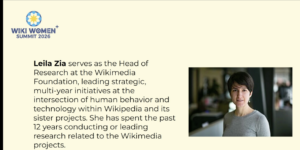
New research by Leila Zia revealed that women read fewer pages per visit, something that may explain why they convert less from reader-to-editor.
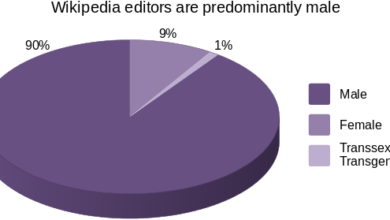
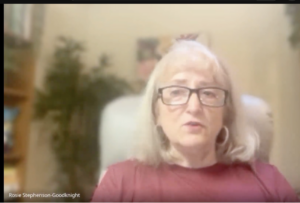
On the plus side, the “Women in Red” project led by Rosie Stephenson-Goodknight and Roger Bamkin, focused on increasing the articles on women to catch up with articles on men, attracted a huge group of new editors and led to recognition as “the Coolest Project of the last 25 years”. Congratulations Rosie!
I fell in love with Wikipedia over ‘yoghurt wars’, but everyone in our group had a different path to it. Paris gathering shows we need to provide more of those paths to increase the intake of future women editors. Inspiring female visitors with help on health issues, understanding of medical diagnoses, and providing inspo on famous women in many professional fields are only some of the ways of opening the scope of topics.
So, here is to ‘yoghurt’ – enjoy it with whatever spelling makes you happy, and may we continue the process of building articles, expanding human-made knowledge for the next 25 years. See you at the next Wikimania in Santiago (Chile) in 2027, with just enough time to brush up on my Spanish. Vamos!