
Future of work – but not as you know it
How GenZs can win in UK job jungle?
Future of work with AI – not what you think
I have been dragged into the Future of Work debate as one of my sons has graduated with an Economics BSc in the summer, walking straight into 21% grad unemployment in London and even higher in the EU. In fact, according to The UK Pulse, graduate vacancies plummeted 48% on last year, to just under 8300 positions in July 2026. What are graduates’ options? By the time my Adam walked across the stage to collect his degree, the entry-level job market he prepared for looked entirely different. For students and early-career creatives, the rapid evolution of generative AI can feel like a very dark shadow over any traditional career paths.
But while some students dwell on the fear of AI eating entry-level jobs, a quiet but impactful shift is happening on the ground:
Gen Z isn’t hiding from these tools but taking them on head-on. What I saw last week during the Teens AI hackathon, they are actively bending and stretching them to build the future of tech and design on their own terms. The most effective way to navigate this sudden collapse in the job market is to get on the front foot. That is why I was happy to help with the AITeen Hackathon and worked with 203 young participants from 23 countries, in five time zones from the Philippines to Texas.
We helped the teams to prepare a portfolio, to learn prototyping and gain experience working in a team under time pressure and across multiple time zones. AI can’t spot genuine human friction, AI can’t align cross-functional teams, or invent meaningful GenZ – friendly solutions from scratch. Young humans can and are still very much needed!
This dynamic was visible during our week-long #TeensInAI hackathon sprint, where I had the privilege of mentoring and judging teams of young builders alongside my co-mentor Shivani Aggraval (Microsoft Field CEO), Nell Anders (CapGemini), Marion Shaw (Data at Cencora) and many others. Supported by industry experts from Microsoft and Google tools, 26 teams raced against tight deadlines to build real-world solutions.
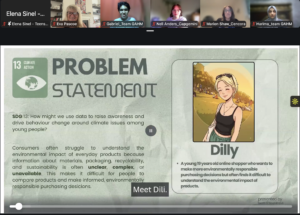
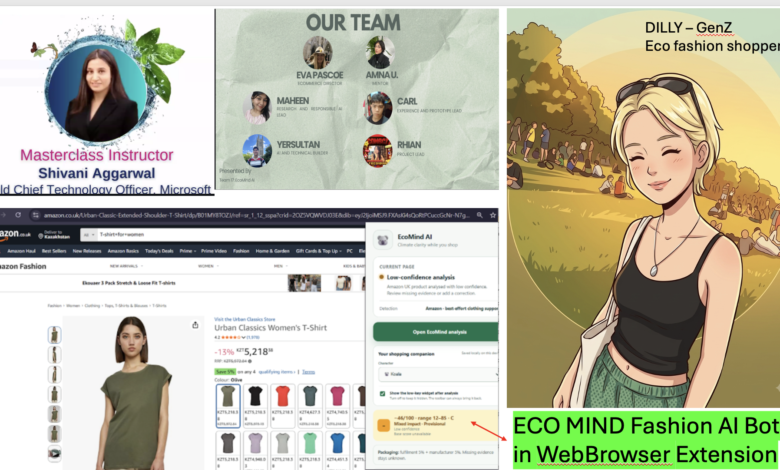
One of the winning shortlisted teams developed a fully functional Web Browser extension tool for a smarter, more ethical Eco-fashion solution tailored specifically for their young peers. The tool is called EcoMind, for Gen Zs like themselves, to shop better, for those who are keen to help the Earth but not trusting wishy-washy copy about the eco-worth of garments on fashion ecom brand sites (no names but you know who you are).
While having world-class infrastructure from Microsoft and Google gave our young builders an incredible AI tools foundation, the most striking pattern across the entire event was the participants’ overwhelming preference for Open-Source software and models.
Given the choice between locked-in proprietary ecosystems and flexible open-source alternatives, our young developers consistently chose open tools. They edited video demos using Kdenlive instead of Adobe Premiere. Some teams gathered user research through LimeSurvey rather than relying solely on standard proprietary forms from Google. This is the future, and as a lifelong Open-Source supporter, it was a joy to see how strong the trend away from proprietary tools is.
Why is Gen Z turning to open source to tackle the AI beast?
Transparency and Data Ownership: Gen Z has a deeply rooted, healthy scepticism toward “black-box” systems. They want to know where their data goes, how models are trained, and who ultimately owns the output. Open-source software offers the visibility and privacy-first control that proprietary platforms routinely obscure.
*Speed and Unlocked Customisation: In a rapid prototyping sprint, vendor lock-in and paywalled features are momentum-killers. Open tools let young technical talent like Yersultan and his peers inspect, modify, and wire together custom workflows without licensing friction or artificial API ceilings.
* Ethical and Decentralized Values: Gen Z views product design through a value-driven lens. Open-source ecosystems align naturally with their preference for community-led innovation, accessibility, and shared progress over corporate monopolies.
*Young folks possess an intuitive sense of where AI accelerates human creativity and where it threatens authenticity. They aren’t waiting for permission or traditional career ladders; they are developing rapid prototyping skills, mastering cross-functional teamwork, and forging their own technical paths.
It was great to work on this alongside Elena Sinel (the Founder of AITeens), Shivani, Nell Anders (CapGemini), Marion Shaw (Concora), Manish Khandelwal (PA Consulting), for creating this life-changing program.
The proof of the effectiveness of hackathons is in the pudding; my oldest daughter Dilly participated in one of the early AI Teens hackathons in 2016. This led to her developing a career in music in NY that leans a lot on creative use and development of digital tools. The job jungle is changing fast, but this generation of Gen Zs is open-source builders and entrepreneurs in social and commercial areas. Congrats to Yersultan Mukatay and the whole EcoMind team on making the shortlist and to both winning teams for excellent work. The future of product design and tech is in exceptionally capable hands; I am excited to see what they will create in the future!
