
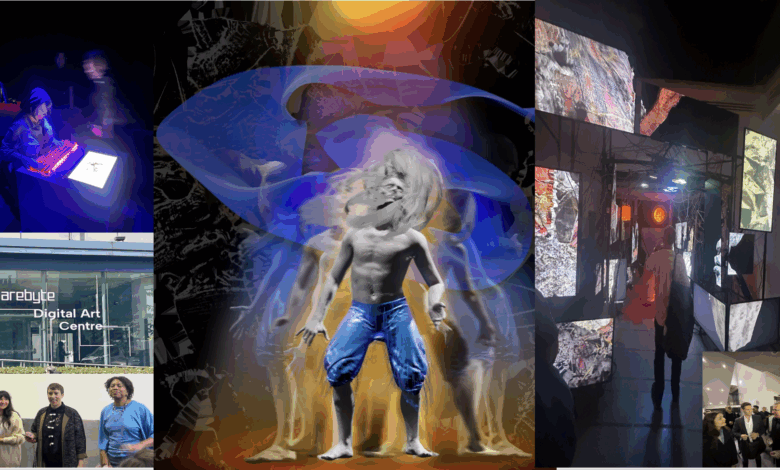
Rebirth in Ruins at new “arebyte” Digital Art Gallery, Camden
“PROPHECY” - Solo show by Auriea Harvey, curated by Pita Arreola
by Eva Pascoe
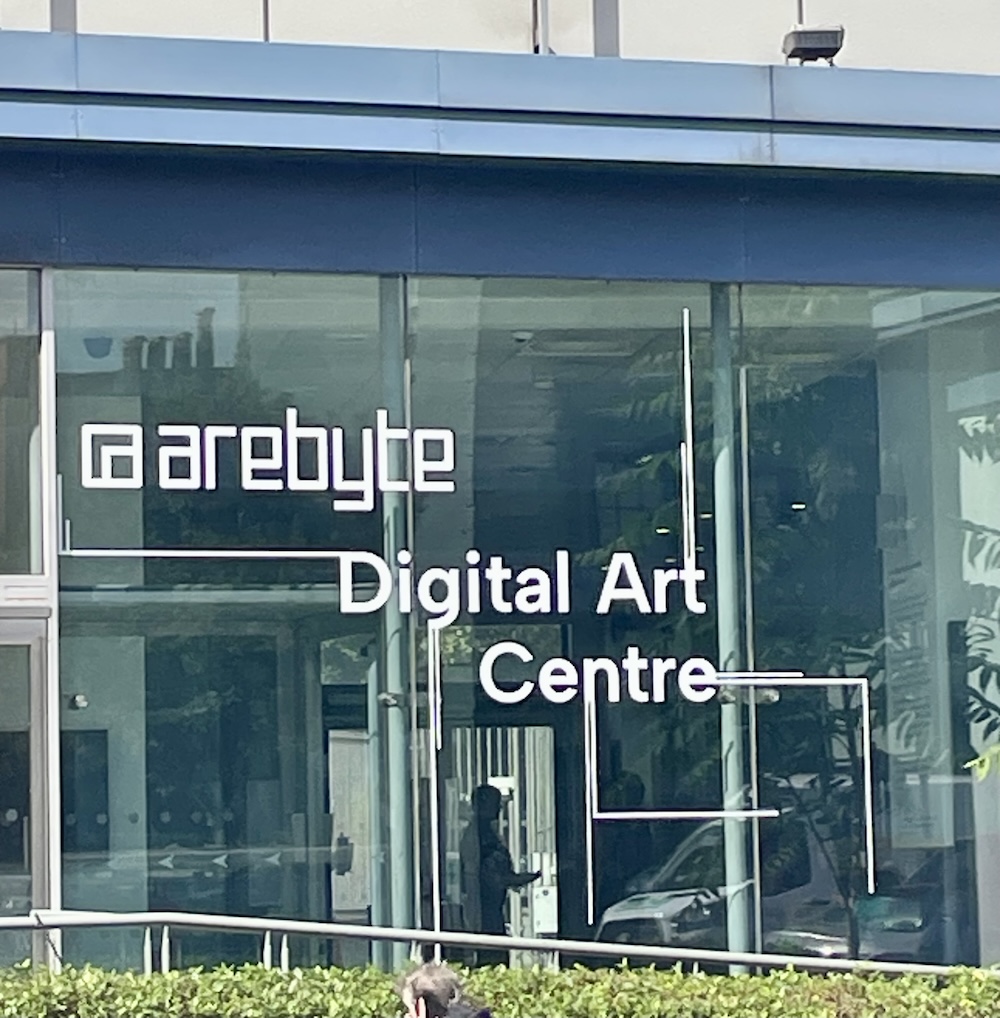
Camden has always been a place of reinvention. In my over two decades in the area, I have seen street markets rise and fall, music venues shutter and return in new guises, and the canal’s industrial skeleton turned into lofts, cafes and creative studios. Into this churn of reinvention comes arebyte’s Digital Art Centre, an ambitious new home for the organisation’s art programme, tucked into a converted British Transport Police station just by the renovated canal. A building once dedicated to surveillance and order now houses artists, studios, and, at its launch, an exhibition about prophecy, hope and the possibility of renewal. The symbolism is strong, the tools of control inverted into a new sanctuary for vision.
The opening show is PROPHECY, the first UK solo exhibition by Auriea Harvey, a pioneering multimedia artist whose practice has long pushed the boundaries of digital form. Curated by Pita Arreola, who brings her intercultural lens from Mexico City, the show stages a spiritual journey for the algorithmic age. It is as if William Blake had swapped his copper plates for holograms and motion capture, and set out to map the moral, political and spiritual combination of a London now ruled by algorithms rather than industry.
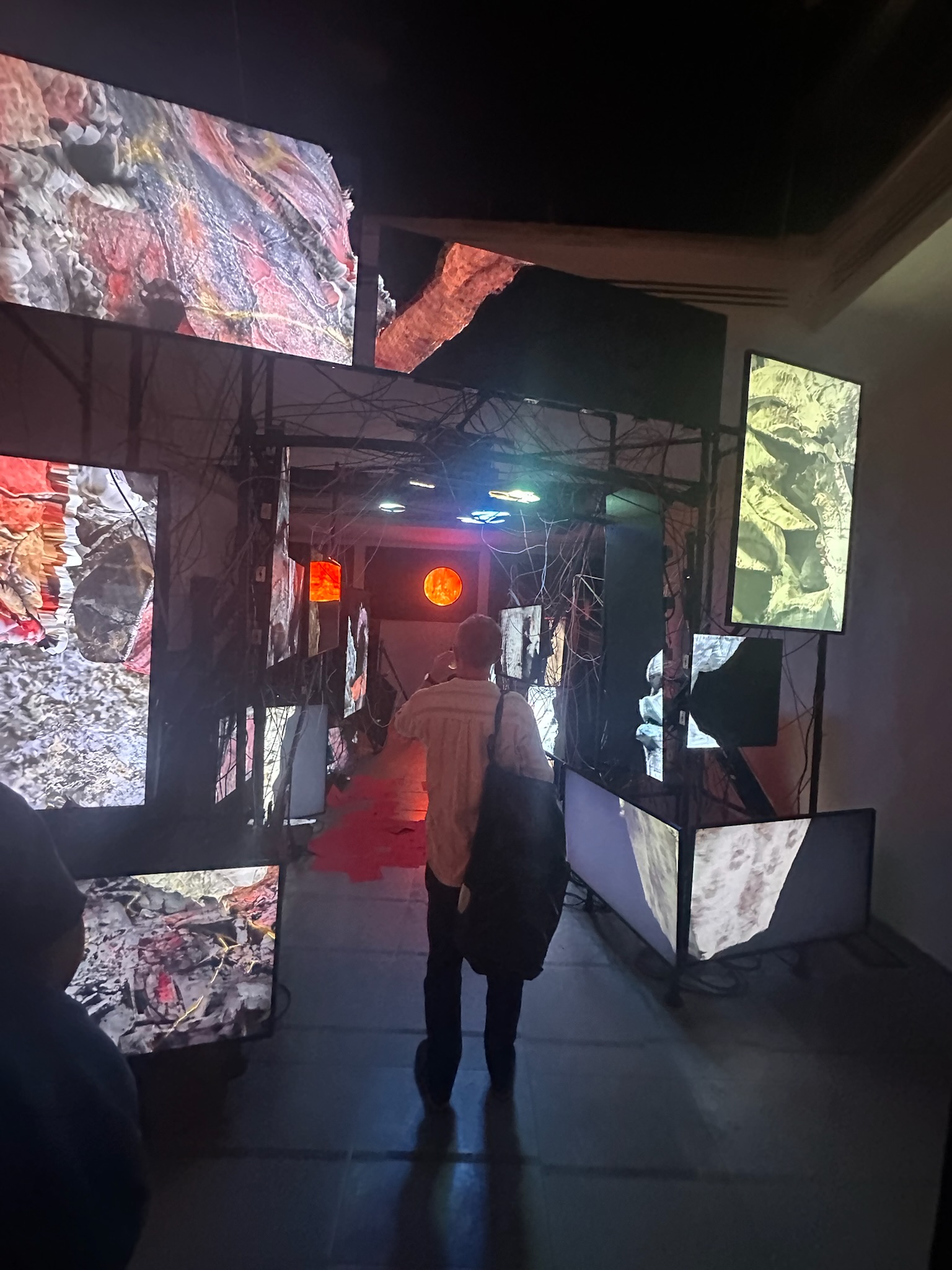 Spread across two immersive chambers, PROPHECY blends AI generated choreography, 3D printing and holographic Church figures into what feels less like an exhibition and more like an encounter. Greek mythological figures arise from digital ruins, their heroic forms disrupted by the glitches of code. Harvey builds what she calls a “mythic technological infrastructure”, a hybrid between cathedral and a server room, designed to both awe and unsettle. It is a nod to the location as the building still hosts the original British Transport Police giant server room (now disconnected), that once was the eye that enforced order across London’s labyrinth of underground tunnels and mysterious routes of night buses.
The curatorial decision to house this work in the bones of a police station sharpens its edge. This was once a place where bodies were catalogued, monitored, disciplined. Now, Harvey presents us with other kinds of figures, spectral, saintly and somewhat elusive.
They are not here to be policed but to haunt us, to remind us what societies fracture and forget. The architecture of authority is repurposed as an architecture of reflection, and dare we say, renewal.
The historical parallel that surfaces throughout the exhibition is William Blake, the London mystic whose prophetic books were both art objects and spiritual critiques. Just as Blake responded to the violence of rapid tech rise and urban exploitation, Harvey confronts the numbing haze of social media feeds and its algorithmic omnipresent governance. In both cases, prophecy is not fortune-telling or prediction but revelation, a way of sharpening perception, of rapid reawakening of empathy amidst a numbing present.
Harvey’s work invites a slowness that feels radical in a time of doomscrolling and frantic swiping. In one chamber, you linger in the half-light as figures flicker in and out of presence, their gestures choreographed by AI but carrying the resonance of liturgical ritual. In another chamber, holographic saint hover as if suspended between heaven and hard drive, the form ghostly but insistent. The exhibition is constructed like a pilgrimage, each chamber demanding new posture of attention, each transition marketing a passage deeper into a mythos that is both ancient and futuristic.
The effect is not sermon-like but contemplative. PROPHECY does not aim to tell us what to think about technology, faith, city or society. It opens a space where those concerns can be felt rather than theorised. Harvey’s ambition lies in her refusal to separate the spiritual from the technological, the mythical from the digital. Instead, the show insists they have always been synthesised, that our devices are as much talismans as tools, charms, and our networks as capable of alienation as communion.
What makes PROPHECY resonate so strongly is its refusal to collapse into the heap of dystopia. While the show acknowledges disconnection and collective pain, it is also full of yearning. The mythological and religious figures are not ironic, they are sincere attempts to rediscover empathy, to recover hope. Against the grain of techno-determinism, Harvey suggests that digital art can be more than surface effects, that it can carve out space for reflection, resistance, and, ultimately, repair.
Stepping back into Camden High Street afterwards, the contrast is overwhelming, the sensory assault of neon shopfronts, the churn of colourful London crowds, the soundtrack of buskers and buzzing market stalls. Yet Harvey’s work lingers, like a half-heard prayer, just on the edges of perception. It reframes the city around you, the ruin and rebirth, the infrastructures of control, the restless search for new meaning.
In the launching of arebyte’s Digital Art Centre with PROPHECY, the organisation has made a bold statement about what kind of art space Camden might become. Not a ‘white cube’ retreat from the world, but an open space where tech, spirituality and urban revival collide. If a police station can be reborn as a temple of digital mysticism, then perhaps the apocalypse, too, can be a site of new beginnings.
Harvey’s prophecy is clear, the future is not something we await, but something we enact, embrace and tackle head on, through feelings, through our intimate connections and through the careful hacking of the tools that threaten to hollow us out. In Camden, prophecy has found a new home, and its call is urgent, radiant and impossible to ignore.
Credits
- Artist: Auriea Harvey @auriea.harvey.studio
- Curation: @pitaarreola
- CEO: Claudel Goy arebyte.com
